
On a Friday afternoon in a quiet village four hours outside Dhaka, Bangladesh, an unusual sight unfolds.
Children walk single file along narrow dirt paths that cut through lush green paddy fields. Rice plants sway in the breeze. Ponds shimmer in the fading light. Mothers follow behind, their colorful patterned saris bright against the deep green landscape, headscarves pulled close.
They are Muslim. They are Hindu.
And they are on their way to a Christian Children’s Sunday School.
Waiting in the open courtyard of a tin-walled, thatch-roofed home are Simson and Sunita, a local church planting couple. On a small table beside them sit a few candies and neatly stacked biscuit packs. Simple packages of cookies that feel, to small hands, like treasure. The snacks are modest. They are not the point. They are an expression of welcome.
This is what it looks like when World Impact’s mission—to see a healthy church in every community experiencing poverty—comes to life.
Let the Little Children Come
Nearly 200 children now gather across three such locations each Friday through Reach Bangla Mission (RBM). Sunita, trained and called to this work, leads the Children’s Sunday Schools herself, opening illustrated Bible stories while mothers sit nearby in the courtyard, listening. Rev. Dr. Prodip Das, founder of RBM and a trusted World Impact partner, coordinated this visit. But it is Sunita who returns week after week to teach these village children.
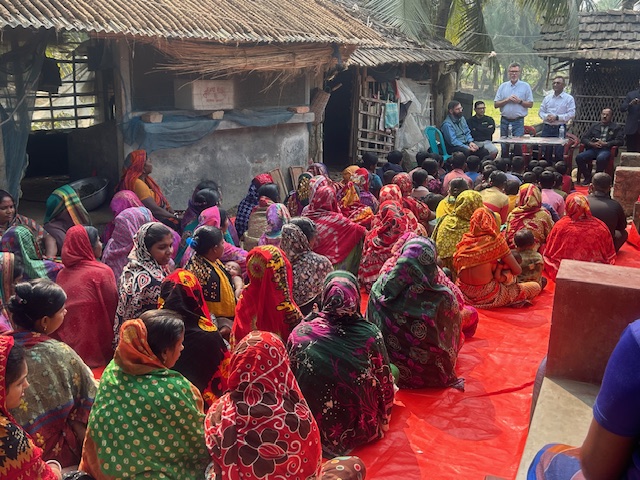
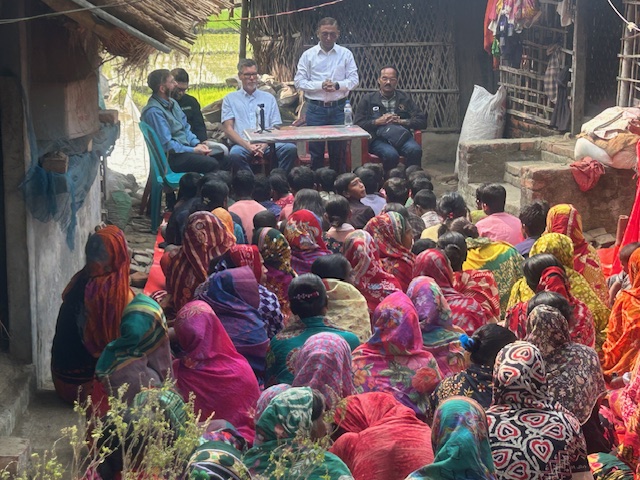
In mid-January, World Impact set foot in Bangladesh for the first time. David Estrada, World Impact’s Senior Ministry Developer, helped lead that inaugural visit, coming alongside local partners like Prodip to launch the country’s first Listening Summit and strengthen leaders already serving on the front lines.
Watching the children gather in that courtyard, he felt the weight of the moment.
“I can’t tell you how joyful that was,” he said later.
When Following Jesus Costs Something
Bangladesh is a South Asian nation of nearly 180 million people. About 91 percent of the population identifies as Muslim. Around 8 percent are Hindu. Only 0.03 percent identify as Christian.
In villages like this one, Christians are not simply a minority. They are nearly invisible.
“We have the same Lord, the same faith, the same God,” David said. “But their Christian life is not our Christian life. They live with a level of courage and boldness that comes from being less than one percent of the population.”
Following Christ here can carry social cost, economic strain, and steady pressure from neighbors or local authorities. Much of the opposition is not dramatic. It is persistent and personal.
And yet every Friday, the children come.
Your partnership makes that possible.
Also read: Philemon’s Story: God’s Timing at Work in Rural India to Grow His Church
Why World Impact Was There
Seeing healthy churches take root in places like this does not begin with imported plans. It begins with local leaders gathered in a room, naming their realities and seeking God’s wisdom together.
That is exactly what happened this January, when more than 50 Christian leaders gathered for the first Listening Summit in Bangladesh. Chairs were pulled close. Stories were shared. And together, leaders began discerning what faithful ministry might look like in the months ahead.
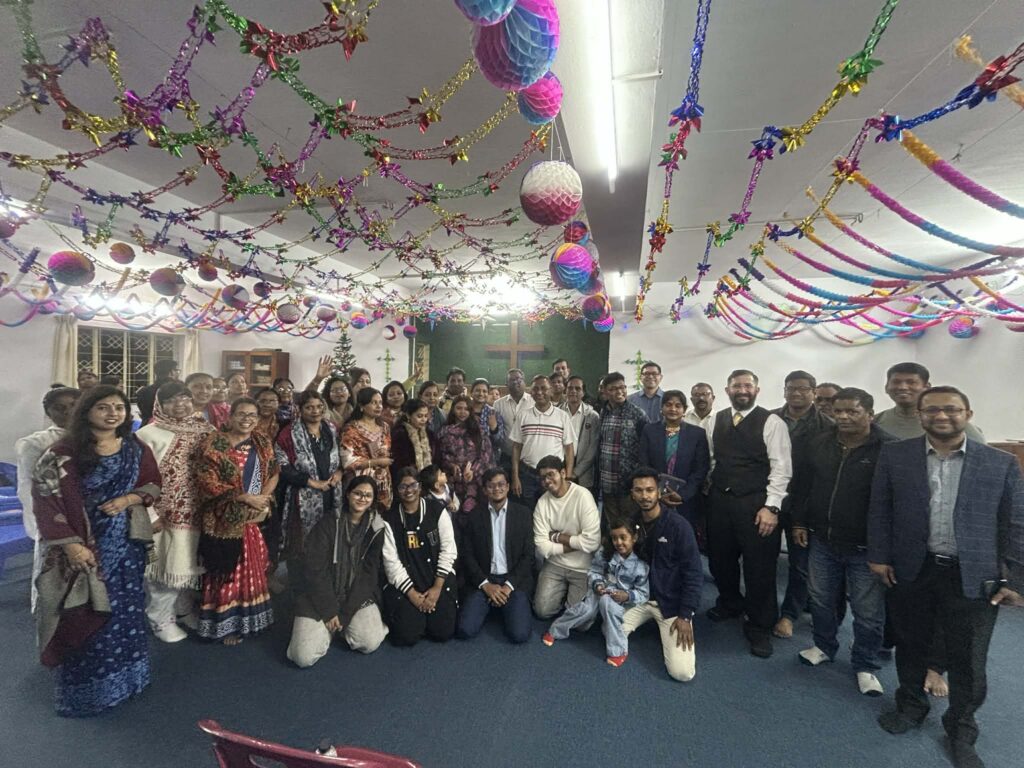
The strategy is relational and long-term. When a trusted partner invites collaboration, World Impact begins a three-year cycle of Listening Summits. Each year, leaders gather, assess what is working, refine their plans, and receive practical tools for ministry. Church planting. Trauma healing. Leadership development. Prison ministry. Theological training. The tools are offered. Local leaders decide what fits their communities.
“Our strategy is to explore a place, find a partner, and begin a three-year cycle,” David explained. It’s part start-up energy, part listening, part rallying the troops, and sometimes quiet encouragement.
He described these leaders as people in foxholes on the front line. And those standing behind them do what they can to strengthen their courage.
Because of your generosity, Bangladesh is now at year one of that journey.
Also read: God is Establishing Church-Based Seminaries in Rural India
The Ministry of Presence
After the Friday gathering, the team sat with Simson and Sunita in their home. For more than five years, they have hosted Sunday worship in that same space. Their congregation hopes to build a church structure one day. They have prayed, planned and waited.
The building has not yet come.
They do not doubt the calling. They simply feel the weight of waiting.
So, the team did not arrive with blueprints or construction funds. They came with perspective, prayer, and partnership.
“We talked about the biblical view of the church,” Prodip shared. “And they understood how God provides for the needs of His church, including a building.”
Sometimes the greatest gift is not a structure. It is steadiness.
Your support allows World Impact to bring that steadiness to leaders who often feel alone.
Where the Gospel Takes Root
As the afternoon light fades over the rice fields, mothers gather their children. Blankets given for the winter are folded over small arms. Cookie wrappers crinkle softly. Tin walls cool as the sun lowers.
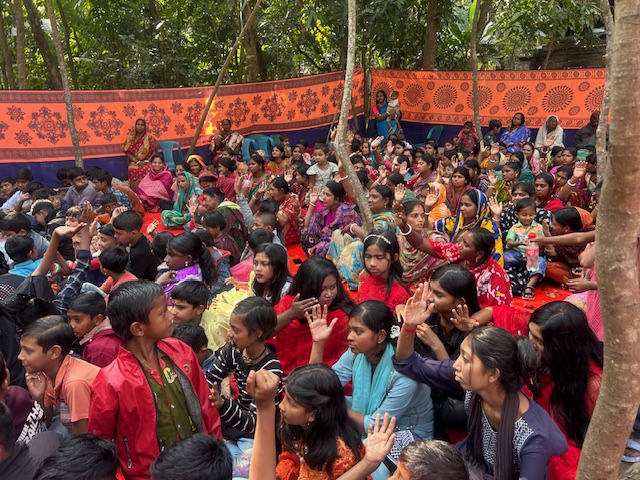
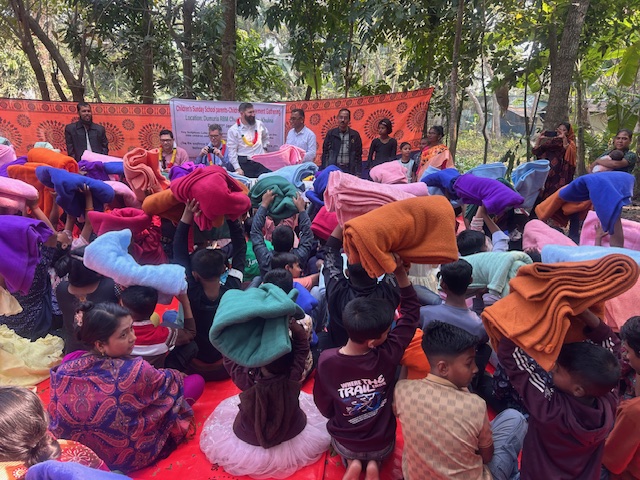
Some of these families may never step inside a formal church building. Some may wrestle privately with what they heard. Some may return next Friday simply because they felt welcomed.
And Simson and Sunita will be ready.
In a country where Christians represent 0.03 percent of the population, courage is a daily practice.
But they are not alone.
Because you give,leaders like Simson and Sunita are strengthened. Because you pray, Listening Summits take root. Because you stand behind the front lines, the gospel continues to move forward in places where it is costly.
This is what happens when we take seriously the call to see a healthy church in every community experiencing poverty.
The children will come again. Will you stand with them?
Please pray for Bangladesh, and for Simson and Sunita. And if you feel led, consider giving to strengthen leaders who are boldly carrying the gospel to the front line.
Read next: Kolkata: A “Slum” Community Receives The Gospel Through Food
